
The Nitrogen Engine: Unlocking the Secret to Doubling Tropical Forest Recovery
For decades, the world has watched with bated breath as tropical forests—the Earth’s vital green lungs—face the devastating impact of deforestation. While planting trees is a noble effort, the speed at which a forest returns to its former glory has long been a mystery. Now, a groundbreaking study led by the University of Leeds has finally identified the “invisible fuel” beneath the surface that dictates the pulse of the jungle: Nitrogen.
A Hidden Accelerator Beneath the Roots
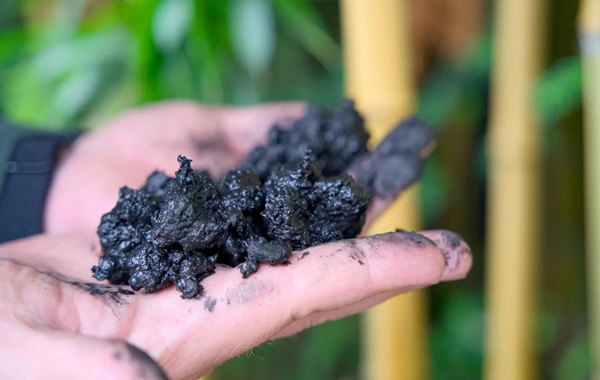
The discovery, the result of the largest and longest experiment of its kind, reveals that tropical forests can bounce back twice as fast when their soil is rich in nitrogen. After monitoring 76 forest plots across Central America for over 20 years, researchers found that this single element acts as a biological catalyst. In the critical first decade of regrowth, nitrogen-rich areas didn’t just grow; they exploded with life, capturing carbon at a rate that far outpaces nutrient-poor regions.
Beyond Fertilizers: A Natural Blueprint
While the science used fertilizers to prove the theory, the researchers are issuing a clear warning: Do not reach for the chemical bags. Widespread artificial fertilization can backfire, releasing nitrous oxide—a potent greenhouse gas—into the atmosphere.
Instead, the study offers a smarter, nature-based strategy. By strategically planting trees from the legume family (such as beans and peas), forest managers can naturally “fix” nitrogen into the soil. This “green engineering” approach allows nature to heal itself using its own ancient mechanisms, potentially saving 0.69 billion tonnes of carbon dioxide from remaining in the atmosphere every year.
The Carbon Stakes
The implications for our planet are staggering. If nitrogen levels are neglected in global reforestation efforts, we are essentially leaving the engine of our climate’s defense system in low gear. In an era where COP summits are fighting for every fraction of a degree in global warming, understanding this soil secret is no longer just academic—it is a matter of planetary survival.
As we look toward a future of “Green Arabia” and restored tropical paradises, one thing is clear: the path to a cooler Earth begins not just with the trees we see, but with the invisible nutrients that sustain them.
Source: science daily
Leonardo Da Vinci’s Art May Be Hiding a Secret: His Own DNA
The Nitrogen Engine: Unlocking the Secret to Doubling Tropical Forest Recovery