
Scientists Reverse 60 Years of Aging in Human Cells, Turning 80-Year-Old Cells Into 20-Year-Olds
Cells from an 80-year-old were reprogrammed to a molecular age below 20, and the slow-motion reset could help reveal how cellular rejuvenation works.
pagead2.goog
What if scientists could turn back the biological clock of an 80-year-old human cell, making it behave like one from someone younger than 20? Researchers in Germany have accomplished just that, reversing more than 60 years of molecular aging while transforming blood cell precursors into neural stem cells capable of producing neurons.
The discovery, made by scientists at the University Hospital of Bonn and the University of Bonn, could provide new insights into one of biology’s biggest mysteries: how aging can be reversed at the cellular level. Unlike previous methods that reset a cell’s molecular age relatively quickly, this approach works gradually, allowing researchers to watch the rejuvenation process unfold over more than 100 days.
Published in Aging Cell, the study offers scientists an unusual opportunity to investigate what drives cellular rejuvenation, what slows it down, and whether those mechanisms could eventually help address age-related diseases such as Alzheimer’s.
Changing Cell Identity and Age
Most cells in the body carry essentially the same genetic instructions, yet develop into specialized types with different jobs. Their identity depends largely on which instructions they use. Under normal conditions, a blood cell cannot simply become a neuron.
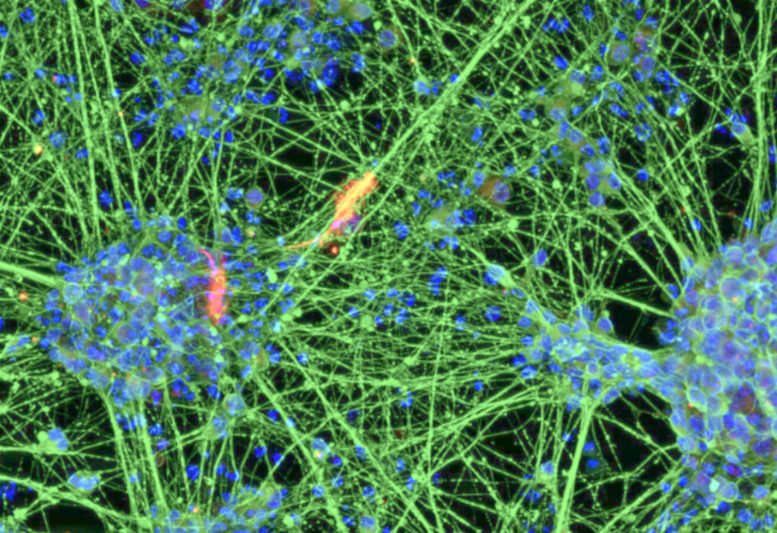
Researchers can redirect a cell’s identity through reprogramming, using combinations of proteins called transcription factors to change gene activity and guide its development. This approach has already allowed scientists to grow nerve tissue from skin cells, which could eventually contribute to treatments for neurodegenerative diseases.
The Bonn team used reprogramming to turn red blood cell precursors into neural stem cells. In earlier experiments, neurons produced through this approach formed connections with existing neurons after transplantation into mouse brains.
“In our current study, however, we focused on a different phenomenon: namely, the observation that cells become significantly rejuvenated during reprogramming,” says Prof. Dr. Oliver Brüstle, director of the Institute of Reconstructive Neurobiology at the University Hospital of Bonn and a member of the Transdisciplinary Research Area (TRA) Life & Health at the University of Bonn.
What The Molecular Clocks Measure
To track rejuvenation, the researchers examined chemical modifications to DNA that change with age. These modifications influence how genetic information is used without rewriting the DNA sequence itself (epigenetics). Epigenetic clocks use patterns in these markers to estimate a cell’s molecular age.
After reprogramming, cells from an 80-year-old registered an age below 20, a reduction of more than 60 years after 50 days.
“We also know that this epigenetic rejuvenation ensures that the cells actually behave like young cells,” says Brüstle.
Scientists had previously observed rejuvenation during a two-step reprogramming process. A specialized cell is first returned to a pluripotent stem cell state, giving it the potential to become virtually any cell type. Researchers then direct it to become a neural stem cell, with a much narrower range of developmental possibilities.
A Slower Route to Understanding Rejuvenation
Unlike the conventional two-step approach, which produces rapid rejuvenation, the Bonn team converted blood cell precursors directly into neural stem cells without passing through a pluripotent stage. The cells’ molecular clocks reset gradually, allowing researchers to track the process for more than 100 days.
That extended timeline gives scientists an opportunity to examine the process as it happens and test what speeds it up or holds it back.
“Rejuvenation that extends over such a long period of time is ideal as an experimental model: since the epigenetic clocks are slowly reset over several weeks, we can use this model to investigate which factors and active substances accelerate or slow down the rejuvenation process.”
For Brüstle, understanding those controls is particularly relevant to brain research: “After all, age is the most important risk factor for neurodegenerative diseases such as Alzheimer’s!”
Source: SciTechDaily
Scientists May Have Discovered Why Men’s Prostates Enlarge With Age
Scientists Reverse 60 Years of Aging in Human Cells, Turning 80-Year-Old Cells Into 20-Year-Olds