Scientists Found an Ancient Human Relative Where None Was Expected
A single ancient jawbone is rewriting what scientists thought they knew about humanity’s forgotten relatives.
A newly published study in Nature reports the first known Paranthropus fossil ever found in Ethiopia’s Afar region. The research was led by University of Chicago paleoanthropologist Professor Zeresenay Alemseged. The specimen was discovered roughly 1000 km north of where this genus had previously been documented, dramatically extending its known geographic range.
The find offers valuable new insight into when and where Paranthropus lived, how flexible it was in different environments, and how it may have interacted with other ancient human relatives, including members of the genus Homo.
“If we are to understand our own evolutionary trajectory as a genus and species, we need to understand the environmental, ecological, and competitive factors that shaped our evolution,” said Alemseged, the Donald N. Pritzker Professor of Organismal Biology and Anatomy at UChicago. “This discovery is so much more than a simple snapshot of Paranthropus’ occurrence: It sheds fresh light on the driving forces behind the evolution of the genus.”
Why Paranthropus Appeared Absent in the Afar
After humans and chimpanzees split from a common ancestor around 7 million years ago, the human lineage underwent a long and complex evolutionary journey. That process eventually produced Homo sapiens roughly 300,000 years ago.
“We strive to understand who we are and how we became to be human, and that has implications for how we behave and how we are going to impact the environment around us, and how that, in turn, is going to impact us,” Alemseged said.

More than 15 known hominin species appear in the fossil record, and they are commonly grouped into four broad categories:
Facultative bipeds, e.g. Ardipithecus — Occasionally bipedal but mostly living in trees and walking on all four limbs.
Habitual bipeds: Australopithecus — Retained arboreality to some degree but mostly practiced upright walking and experimented with stone tools.
Obligate bipeds: Homo — The genus to which modern humans belong, characterized by a larger brain, sophisticated tools, and obligate bipedalism.
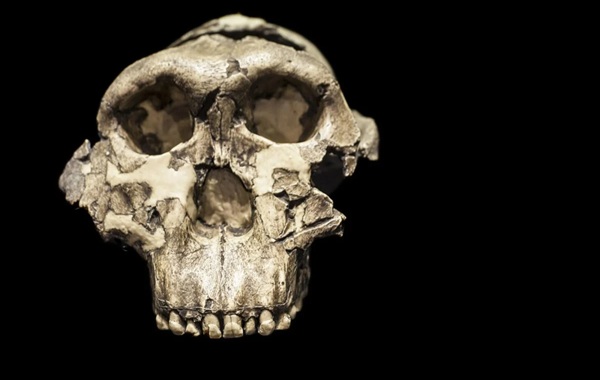
Robust hominins: Paranthropus (also known as robust australopithecines) — Habitually bipedal like Australopithecus but distinguished by extremely large molars capped by thick enamel and facial and muscular configurations that suggest a powerful chewing apparatus.
Alemseged explained that the apparent lack of Paranthropus fossils in the Afar had long stood out to researchers. “Hundreds of fossils representing over a dozen species of Ardipithecus, Australopithecus, and Homo had been found in the Afar region of northern Ethiopia, so the apparent absence of Paranthropus was conspicuous and puzzling to paleoanthropologists, many of whom had concluded the genus simply never ventured that far north.”
Some scientists proposed that Paranthropus may have been restricted to southern regions because of dietary specialization, while others suggested it was unable to compete with the more adaptable Homo. Alemseged rejected both explanations. “Neither was the case: Paranthropus was as widespread and versatile as Homo, and the new find shows that its absence in the Afar was an artifact of the fossil record.”
A 2.6 Million-Year-Old Jawbone Reframes Early Human Evolution
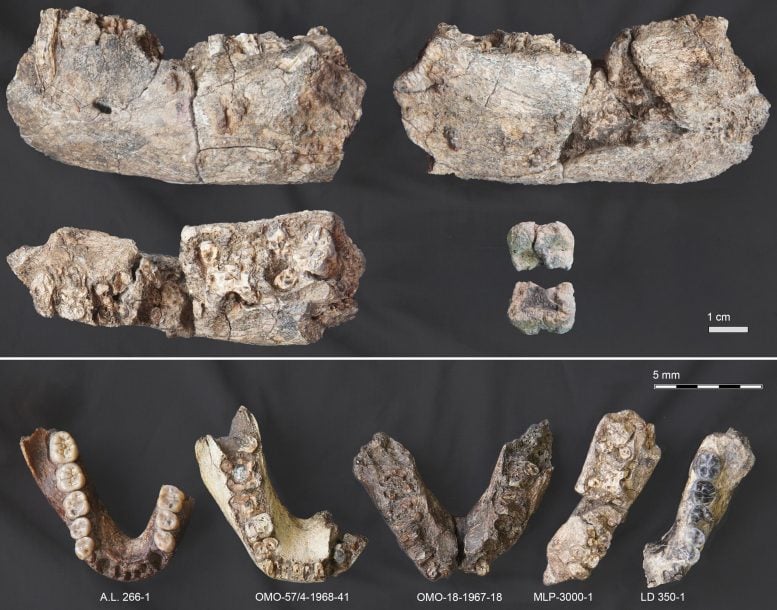
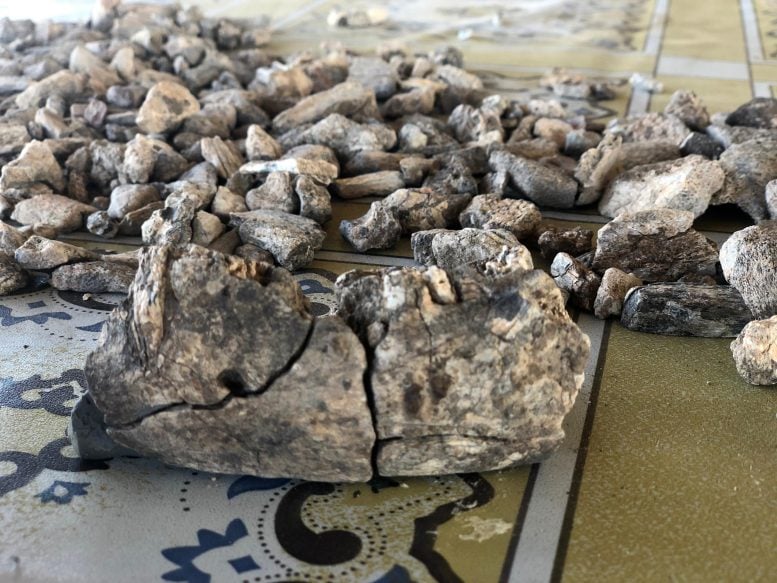
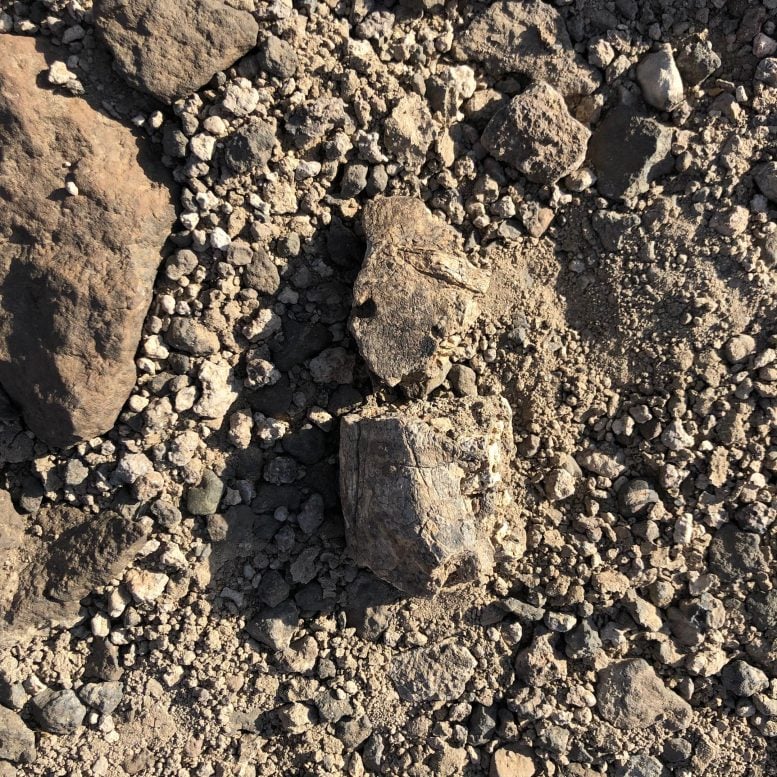
The newly described fossil is a partial jaw dating to 2.6 million years ago, recovered from the Mille-Logya research area in the Afar. It ranks among the oldest Paranthropus specimens discovered so far. Researchers carefully collected numerous fragments at the site and transported them to Chicago, where the team studied the fossil’s internal structure and shape using advanced micro-CT scanning.
“It’s a remarkable nexus: an ultra-modern technology being applied to a 2.6-million-year-old fossil to tell a story that is common to us all,” Alemseged said.
The evidence indicates that Paranthropus was not limited to a narrow range or easily displaced by early members of Homo. Instead, it appears to have been both widespread and adaptable, occupying a similar evolutionary landscape.
Rethinking the “Nutcracker” Label
For decades, Paranthropus has been informally known as the “nutcracker” genus, a nickname based on its massive jaws, thick enamel, and oversized molars. These traits led to the assumption that the genus relied on a highly specialized and restricted diet. The Afar fossil challenges that view, suggesting that from its earliest origins, Paranthropus was capable of exploiting a broader range of food resources.
“The new discovery gives us insight into the competitive edges that each group had, the type of diet they were consuming, the type of muscular and skeletal adaptations that they had, whether they were using stone tools or not — all parts of their adaptation and behavior that we are trying to figure out,” Alemseged said. “Discoveries like this really trigger interesting questions in terms of reviewing, revising, and then coming up with new hypotheses as to what the key differences were between the main hominin groups.”
Source: SciTechDaily
Lost tomb of the mysterious ‘cloud people’ unearthed after 1,400 years in ‘discovery of the decade’
Scientists Found an Ancient Human Relative Where None Was Expected/Scientists Found an Ancient Human Relative Where None Was Expected