Mind-Blowing New Fossil Site Found in The ‘Dead’ Heart of Australia
The arid heart of Australia may not easily support life now, but once, many aeons ago, it was lush and teeming. What is now arid desert and dry shrub- and grasslands was once thick with dense forests, alive with life.
“The fossils we have found prove that the area was once a temperate, mesic rainforest and that life was rich and abundant here in the Central Tablelands, NSW,” said paleontologist Matthew McCurry from the Australian Museum Research Institute.
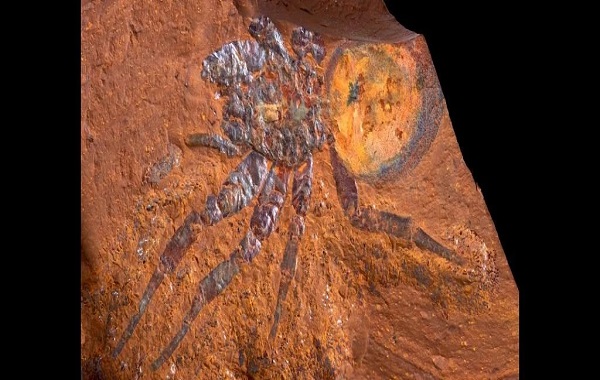
“Many of the fossils that we are finding are new to science and include trapdoor spiders, giant cicadas, wasps and a variety of fish. Until now it has been difficult to tell what these ancient ecosystems were like, but the level of preservation at this new fossil site means that even small fragile organisms like insects turned into well-preserved fossils.”
The assemblage, named McGraths Flat, is so exceptional that it has been classified as a Lagerstätte – a sedimentary fossil bed that’s so extraordinary that sometimes even soft tissues have been preserved. In McGraths Flat, organisms have been so well preserved that even subcellular structures can be made out in some fossils.
Even more amazingly, it’s a type of rock in which exceptional fossils are not usually seen, an iron-rich rock called goethite.
The fossils in the assemblage bear a resemblance to the ecosystems in modern Australian rainforests, the researchers said, but it’s the fine details that really make a difference.
For instance, subcellular structures called melanosomes that give tissues their pigment have been preserved in the site’s fossilized feather and also in the eyes of a fish and a fly.
Although the melanosomes themselves are unpigmented, their structure can be compared to the structure of modern melanosomes to help figure out how the tissues might have been hued. This allows the researchers to figure out what colors the various McGraths flat animals were, including the feather.
“The fossils also preserve evidence of interactions between species,” said microbiologist Michael Frese of the University of Canberra.
“For instance, we have fish stomach contents preserved in the fish, meaning that we can figure out what they were eating. We have also found examples of pollen preserved on the bodies of insects so we can tell which species were pollinating which plants.”
Soberingly, the fossils also might contain a hint of what’s in store for our future.
According to an analysis of the pollen grains in the assemblage, the McGraths Flat rainforest was being encroached upon by arid climate areas. This is not unexpected; during the Miocene, global temperatures had started to rise; it was during this period that the Australian continent started to transform from lush to arid.
“The McGraths Flat plant fossils give us a window into the vegetation and ecosystems of a warmer world, one that we are likely to experience in the future,” said botanist David Cantrill of the Royal Botanic Gardens Victoria in Australia.
“The preservation of the plant fossils is unique and provides important insights into a time period for which the fossil record in Australia is rather poor.”
Source: Science Alert
Mind-Blowing New Fossil Site Found in The ‘Dead’ Heart of Australia/Mind-Blowing New Fossil Site Found in The ‘Dead’ Heart of Australia