How Did Greater Khorasan Rival Mesopotamia and the Indus Valley?
Discovery of a Luxurious Young Woman’s Grave Sparks New Questions
What secrets lie beneath Eastern Iran’s ancient soils? Archaeologists at Tepe Chalow have uncovered the richest Bronze Age burial ever found in the Greater Khorasan region, shedding fresh light on a civilization once thought peripheral to Bactria–Margiana networks.
Expanding the BMAC Horizon: Greater Khorasan Civilization Revealed
Dr. Ali Vahdati and his colleagues—Raffaele Biscone, Roberto Dan, and Marie‑Claude Trémouille—analyzed this extraordinary tomb, labeled Grave 12, for their study published in Iran. Their findings challenge the assumption that BMAC cultural materials were confined to Margiana and Bactria. Instead, they reveal a Greater Khorasan Civilization (GKC) extending into northeastern Iran, rivaling Mesopotamia and the Indus Valley in sophistication.
Rich Grave Goods Highlight Elite Status
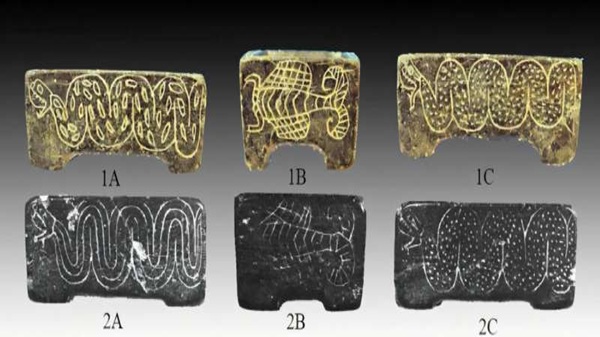
What does a Bronze Age elite look like? The teenage girl’s grave contained 34 artifacts, including ivory pins, gold rings and earrings, bronze tools, and an array of stone objects carved from chlorite, lapis lazuli, serpentine, and limestone. Three intricately decorated chlorite cosmetic containers—one featuring snakes and scorpions—and multiple seals indicate her active role in ancient trade networks.
Seals as Symbols of Power and Trade Connections
Why were so many seals buried with her? In Bronze Age societies, seals served as markers of ownership and commerce. The presence of several seals in Grave 12 suggests that this young woman held significant economic or administrative authority, reinforcing the idea that GKC women played prominent societal roles.
GKC Trade Routes: Early Silk Road Precursors
How did Tepe Chalow connect to distant civilizations? Situated on a key corridor between eastern Iran, the Gorgan Plain, and the Iranian Plateau, Chalow Tepe formed part of the early trade routes that later became known as the Silk Roads. By the early second millennium BCE, GKC merchants exchanged goods with Mohenjo‑daro, Mesopotamian dynasties, and Persian Gulf coastal communities.
Inherited Status or Achieved Rank?
Was her wealth inherited, earned, or both? Given her youth, Grave 12’s lavish assemblage may reflect inherited prestige. Yet, broader patterns suggest GKC female burials often outshine male ones in richness, hinting that women in Greater Khorasan exercised authority independent of kinship alone.
Untangling the GKC Identity: Marhashi and Beyond
Could GKC be the elusive Marhashi? Mesopotamian texts describe Marhashi as a source of chlorite and other valuable materials. While the ancient name of GKC remains uncertain, linguistic and archaeological parallels make Marhashi a compelling candidate.
Future Scientific Analyses Promise Deeper Insights
What will isotopic and DNA studies reveal about her life? Dr. Vahdati’s team plans interdisciplinary analyses—ranging from dietary reconstructions and genetic origins to metal‑ and ceramic‑production techniques—to unravel GKC cultural dynamics further.
International Collaboration Drives New Discoveries
How does global expertise shape our understanding? This research exemplifies cross‑border cooperation, drawing on archaeologists, anthropologists, zooarchaeologists, and archaeobotanists. Their combined efforts continue to illuminate the Bronze Age world of Greater Khorasan.
By integrating active voice, targeted keywords like “Greater Khorasan Civilization,” “Bronze Age burial,” and “ancient trade networks” into the subheadings, this magazine‑style article delivers depth, clarity, and SEO impact—inviting readers to ponder, “What other hidden legacies remain buried beneath Iran’s ancient plains?”
Source: How Did Greater Khorasan Rival Mesopotamia and the Indus Valley?
Shocking Ancient Egypt burial reveals unthinkable acts carried out on corpses after death
Shocking Ancient Egypt burial reveals unthinkable acts carried out on corpses after death