Are We on the Verge of Discovering the First Volcanic Exomoon?
In 2012, astronomers detected a gas giant transiting WASP-49A, a G-type star located about 635 light-years away. This exoplanet, WASP-49 b, is a gas giant similar in size to Jupiter, but only 37% as massive. Follow-up observations in 2017 revealed an extensive cloud of sodium surrounding WASP-49 b, perplexing scientists due to the lack of sodium abundance in both the star and planet.
Could a Volcanic Moon Explain the Sodium Cloud?
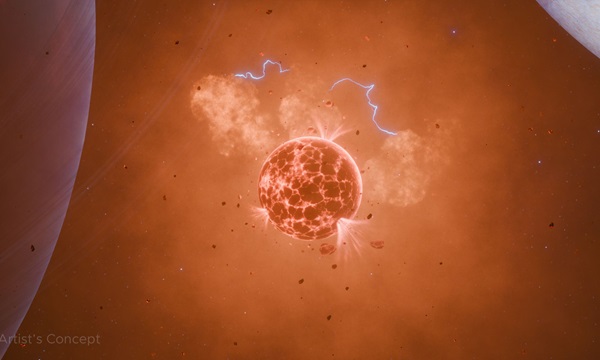
Interestingly, gas emissions from Jupiter’s volcanic moon Io create a similar phenomenon in our Solar System. In 2019, an international team led by Apurva Oza from NASA’s Jet Propulsion Laboratory proposed that the sodium cloud might be linked to a volcanic exomoon orbiting WASP-49 b. Although no exomoon has been directly detected, the presence of such a moon could explain the sodium cloud’s origin.
Similarities to Io: The Solar System’s Most Volcanic Body
Io, known for its intense volcanic activity, spews lava and gases, including sodium and sulfur, creating a massive cloud around Jupiter. The team theorized that a similar process could be occurring around WASP-49 b, where a volcanic moon’s emissions are replenishing the sodium cloud at an astonishing rate of 100,000 kg per second.
Evidence Supporting a Volcanic Exomoon
Despite not detecting the exomoon directly, the team found several clues that suggest a separate body is responsible for the sodium cloud. For example, the cloud’s size increased during specific observations, implying it is being regularly replenished. Additionally, the cloud was observed moving faster than the planet, further supporting the idea that it’s generated by another orbiting body.
The Exomoon’s Orbit and Possible Fate
Using the Very Large Telescope’s ESPRESSO instrument, the researchers simulated an exomoon orbiting WASP-49 b with a period of eight hours, matching the observed cloud activity. However, if the moon exists, tidal forces from the gas giant could eventually cause it to disintegrate. According to Oza, this would lead to a dramatic and destructive end for the exomoon.
What’s Next? More Observations Needed
While the evidence is compelling, the study emphasizes the need for follow-up observations to confirm the existence of this possible volcanic exomoon and to better understand the sodium cloud’s dynamics. This discovery could open new avenues for studying moons beyond our Solar System, shedding light on their volcanic activity and their interaction with host planets.
Source: Are We on the Verge of Discovering the First Volcanic Exomoon?
Did Mars Once Host Life? Curiosity Rover’s Shocking New Discovery
Did Mars Once Host Life? Curiosity Rover’s Shocking New Discovery