
Analysis of Tattoos of 2300-Year-Old Mummy from Siberia
In the mountains of Altai, archaeologists have discovered an ancient woman with tattoos, which are more than 2 000 years old – and these are not just pranks, but real works of art. Thanks to modern technology, scientists were able to consider them in the smallest detail and learn how the ancient masters and their mysterious work looked.
Tattoo is not a fashionable phenomenon of the 21st century. Its history goes deep into thousands of years, but usually the skin of ancient people does not persist, and therefore scientists know almost nothing about how they decorated their bodies. Almost – with the exception of the unique finds in the Siberian mountains of Altai, where the permafrost “frozen” time.
Ice mummy with live drawings
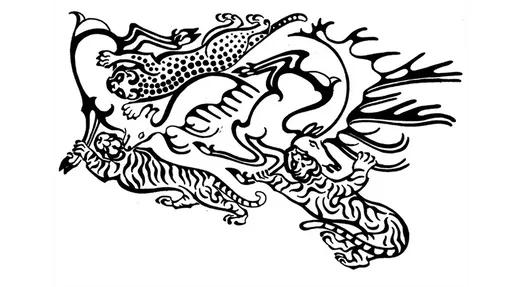
In a new study published in the journal Antiquity, scientists examined the mummy of a 50-year-old tattooed woman from Pazzyniki culture, who lived in Altai about 2300 years ago. Her body was buried in a special mound cut in permafrost, and her skin was preserved so well that with the help of infrared and digital photography, archaeologists were able to see tattoos to microscopic details.
On the right hand, women found scenes with fantastic animals, the fight of wild animals, perhaps even a griffin. The lines are clear and straight, and the images fit exactly into the anatomy of the hand. All this speaks of a high level of skill of the artist. Unlike the right hand, the tattoos on the left look much more modest – perhaps it was sketches, or they were made by a less experienced master.
Spikes and multi-stage techniques
The analysis showed that the tattoos were made in several stages. Some lines are applied using a single-position tool, others – by a numerco-point method. Judging by the nature of the punctures, the masters could use ligaments of spikes of plants or bones collected in bundles and tied with tendons. However, the tools themselves have not yet been found – most likely, they simply did not survive the century.
The opinion of contemporaries confirmed: such tattoos would be difficult to repeat even with modern equipment. So, it was not an accidental pattern “for memory”, but a thoughtful, meaningful work – most likely, performed by a professional with training and experience.
Secrets and Conjectures
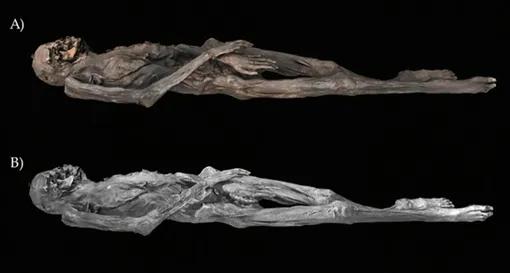
It is not yet known whether the Pazyryk tattoo artists had workshops, or they wandered together with the tribes. It also remains a mystery why some of the tattoos were cut when balming the body. Perhaps tattoos did not matter in the afterlife – or vice versa, cutting was part of the ritual.
Source: Analysis of Tattoos of 2300-Year-Old Mummy from Siberia